Told you have a disc problem? You have more options than pain pills, injections, or surgery.
Back or neck pain that shoots into an arm or leg, numbness, tingling, or weakness can be frightening, especially after an MRI report full of words like “herniation,” “protrusion,” or “extrusion.”
At Greenbrier Family Chiropractic, we see many patients who were told to rest, take medication, or wait for a surgical consult. For most people with a disc injury, conservative care is the recommended first step, and it is where our doctors have focused for decades.
Our goal is to find out what is actually driving your symptoms, explain it in plain language, and give you a clear plan, including a referral when something needs a medical specialist.
What Is a Disc, and What Goes Wrong?
Between each pair of vertebrae is a disc that works as a shock absorber and spacer. Each
disc has a tough, layered outer ring (the annulus) surrounding a softer, gel-like center (the nucleus).
Over time, or after an injury, the outer fibers can weaken or tear. When that happens, the disc can change shape and press on nearby nerves or irritate them chemically. That nerve involvement is what often causes pain to travel away from the spine.
Bulging disc
The disc extends past its normal border in a broad, even way, similar to a tire that is low on air. Bulges are very common, and many cause no symptoms at all. When they do, it is usually because they are narrowing the space around a nerve.
Herniated disc
Part of the inner material pushes through a tear in the outer ring. Herniations are usually more localized than bulges and are more likely to irritate a specific nerve root. You may see them called a protrusion, extrusion, or sequestration on an MRI report, depending on how far the material has moved.
“Slipped” disc
This is a common phrase, but discs do not actually slip out of place. People who say “slipped disc” almost always mean a bulge or herniation. (It is also different from spondylolisthesis, where a vertebra shifts forward. We evaluate for that as well.)
Degenerative disc disease
Despite the name, this is not really a disease. It describes discs that have lost height and hydration over time. Degenerated discs are more vulnerable to bulging and herniation, and they can contribute to stenosis (narrowing of the spaces the nerves pass through).
Common Symptoms
Disc problems do not always hurt where the disc is. Symptoms depend on which disc is involved and which nerve it affects.
Low back (lumbar) discs may cause:
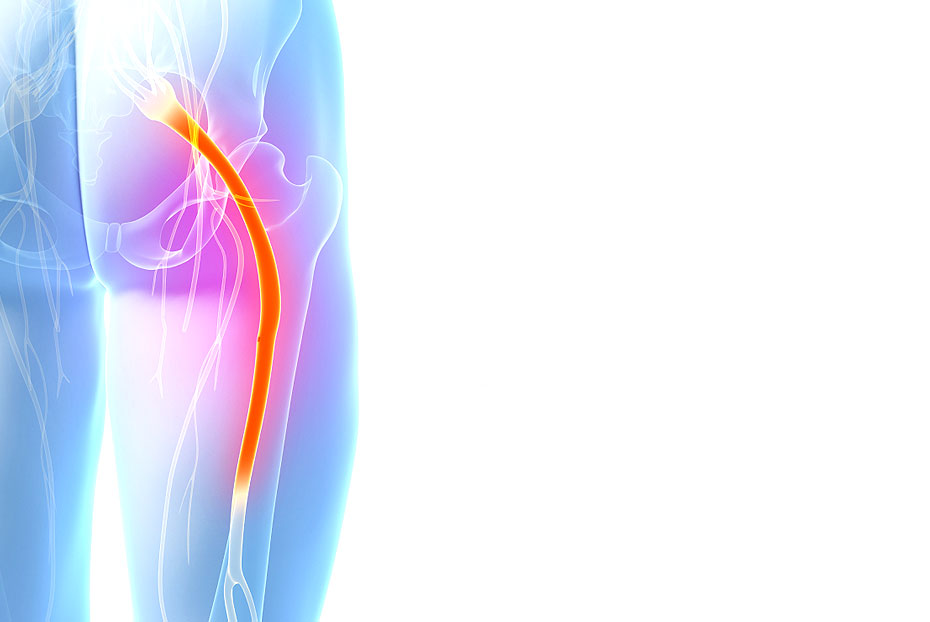
- Low back pain that worsens with sitting, bending, lifting, coughing, or sneezing Pain that travels through the buttock and down the leg (sciatica)
- Numbness or tingling in the leg or foot
- Weakness in the leg, ankle, or foot
- Neck (cervical) discs may cause:
- Neck pain and stiffness
- Pain between the shoulder blades
- Pain, numbness, or tingling down the arm into the hand or fingers
- Grip weakness or dropping things
- Headaches at the base of the skull
Learn more about related conditions: Sciatica · Pinched Nerves · Low Back Pain · Neck Pain
What Causes Disc Injuries?
Most disc injuries build over time before one ordinary moment, such as bending to pick something up, finally triggers symptoms. Contributing factors often include:
- Long hours of sitting or driving
- Repeated bending, twisting, and lifting at work or home
- Auto accidents, falls, and sports injuries
- Previous back or neck injuries that never fully resolved
- Weak core and hip muscles
- Excess body weight, which increases load on the lower spine
- Smoking, which reduces blood flow and nutrition to the discs
- Poor sleep, low activity, and diets that promote inflammation
Because the disc is only one piece of the picture, we also look at the joints, muscles, posture, and movement patterns above and below the injured area, including the hips, pelvis, and shoulders.
Your MRI Is Important, but It Is Not the Whole Story
Disc bulges and degeneration show up on MRIs of many people who have no pain at all, and they become more common with age. That means an MRI finding does not automatically
explain your symptoms, and a dramatic-sounding report does not automatically mean you need surgery.
What matters is whether the imaging matches your exam: your reflexes, strength, sensation, and how your symptoms respond to specific movements and positions. Your doctor will put those pieces together before recommending care.
Already have imaging? Bring the report, and the disc if you have it, to your first visit.
How We Help Disc Patients
1. A thorough evaluation
Your first visit includes a detailed history and an examination that may include: Neurological testing of reflexes, muscle strength, and sensation
- Orthopedic tests that help identify the source of nerve irritation
- Posture and movement evaluation
- Review of prior imaging, or in-office x-rays when appropriate
- MRI referral when your findings call for it
2. Non-surgical spinal decompression
Spinal decompression uses gentle, controlled traction to reduce pressure on the injured disc and surrounding nerves. Sessions are done while you rest comfortably, and most patients find them relaxing. Decompression is a core part of care for many disc patients, though it is not appropriate for everyone. We screen for that during your exam.
3. Chiropractic adjustments suited to your condition
We use both traditional and low-force techniques, so care can be adjusted to your injury and comfort level. Improving how the surrounding joints move can take stress off the injured area and ease muscle guarding.
4. Exercises and home care
Recovery continues between visits. We teach specific stretches, strengthening exercises, and ways to sit, sleep, lift, and move that protect the disc while it heals, and we progress them as you improve.
5. Nutrition and inflammation support
With training in functional medicine, our doctors look at factors that affect how well tissue heals, including diet, inflammation, hydration, and nutrients such as protein, vitamin D, and magnesium. For some patients, this is the piece that finally helps progress hold.
What to Expect During Care
Disc injuries usually take time to calm down and more time to heal. Many patients notice changes in the first few weeks, but feeling better does not always mean the disc is fully stable. We will explain your expected timeline, what progress should look like, and how we will measure it at re-evaluations.
If you are not improving as expected, we will tell you and help you take the next step, whether that is further imaging, pain management, or a surgical opinion. We work alongside your medical providers when that is in your best interest.
When to Seek Emergency Care
Go to the emergency room or call 911 if you have back pain with any of the following: Numbness in the groin, genitals, or inner thighs (“saddle” area)
- New loss of bladder or bowel control, or difficulty urinating
- Rapidly worsening weakness in one or both legs
- Back pain with fever, unexplained weight loss, or a history of cancer
- Pain following a serious fall or accident
These can be signs of a condition that needs immediate medical attention.
Frequently Asked Questions
Can a herniated disc heal without surgery?
Yes, in many cases. Most people with a herniated disc improve with conservative care, and herniated material can shrink over time. Surgery is typically reserved for severe or progressing nerve problems or for cases that do not respond to non-surgical care.
Is chiropractic care safe with a herniated disc?
When care is based on a thorough exam, it is appropriate for many disc patients. We choose techniques based on your specific injury, and we use gentle, low-force options when needed. If your exam shows anything that makes care inappropriate, we will refer you.
What is the difference between a bulging disc and a herniated disc?
A bulge is a broad, even extension of the disc beyond its normal border. A herniation happens when inner disc material pushes through a tear in the outer ring, usually in a more focused area. Either one can cause symptoms if it affects a nerve.
Do I need an MRI before my first visit?
No. Many patients start without one. If your exam suggests you need imaging, we will order or refer for it. If you already have an MRI, please bring the report.
Should I rest in bed until it feels better?
Prolonged bed rest usually slows recovery. Gentle movement, such as short walks, is generally better than staying still. Your doctor will tell you which activities to avoid for now and which ones help.
How long does recovery take?
It depends on the size and location of the injury, how long you have had symptoms, and how consistently you follow your care plan. We will give you an estimated timeline after your exam.
Do you accept insurance?
Yes. Most insurance plans cover chiropractic care. We also welcome self-pay patients and accept CareCredit.
I was told I need surgery. Can I still come in?
Yes. Many patients seek a conservative option before committing to surgery. We will evaluate you and tell you honestly whether we think we can help.
Why Patients Choose Greenbrier Family Chiropractic
We’ve been serving Hampton Roads since 1993, with more than 105 years of combined doctor experience and were voted #1 Chiropractor in Chesapeake in The Virginian-Pilot/Virginia Media’s 2026 Best Of awards.
We offer:
- In-office spinal decompression, adjustments, and home-care programs under one roof
- Whole-body approach that looks at the hips, shoulders, and overall health, not just the spot that hurts
- Functional medicine training to address nutrition and inflammation
- Convenient Greenbrier location for patients from Chesapeake, Virginia Beach, Norfolk, Portsmouth, Suffolk, Moyock, and Elizabeth City
Ready to Find Out What’s Behind Your Pain?
If disc pain, sciatica, or arm or leg symptoms are keeping you from work, sleep, or the activities you enjoy, schedule an evaluation. We will help you understand what is going on and what your options are.